The latest Rent vs. Buy Report from Trulia shows that homeownership is still cheaper than renting in 98 of the 100 largest metro areas in the United States. Let's get together to find you your dream home - it may be cheaper than you think!
You’ll find our blog to be a wealth of information, covering everything from local market statistics and home values to community happenings. That’s because we care about the community and want to help you find your place in it. Please reach out if you have any questions at all. We’d love to talk with you!
The latest Rent vs. Buy Report from Trulia shows that homeownership is still cheaper than renting in 98 of the 100 largest metro areas in the United States. Let's get together to find you your dream home - it may be cheaper than you think!

Interest rates for a 30-year fixed rate mortgage climbed consistently throughout 2018 until the middle of November. After that point, rates returned to levels that we saw in August to close out the year at 4.55%, according to Freddie Mac’s Primary Mortgage Market Survey.
After the first week of 2019, rates have continued their downward trend. As Freddie Mac’s Chief Economist Sam Khater notes, this is great news for homebuyers. He states,
“Mortgage rates declined to start the new year with the 30-year fixed-rate mortgage dipping to 4.51 percent. Low mortgage rates combined with decelerating home price growth should get prospective homebuyers excited to buy.”
In some areas of the country, the combination of rising interest rates and rising home prices had made some first-time buyers push pause on their home searches. But with more inventory coming to market, continued price growth, and interest rates slowing, this is a great time to get back in the market!
According to the latest forecasts from Fannie Mae, the Mortgage Bankers Association, and the National Association of Realtors, mortgage rates will increase over the course of 2019, but not at the same pace they did in 2018. You can see the forecasts broken down by quarter below.
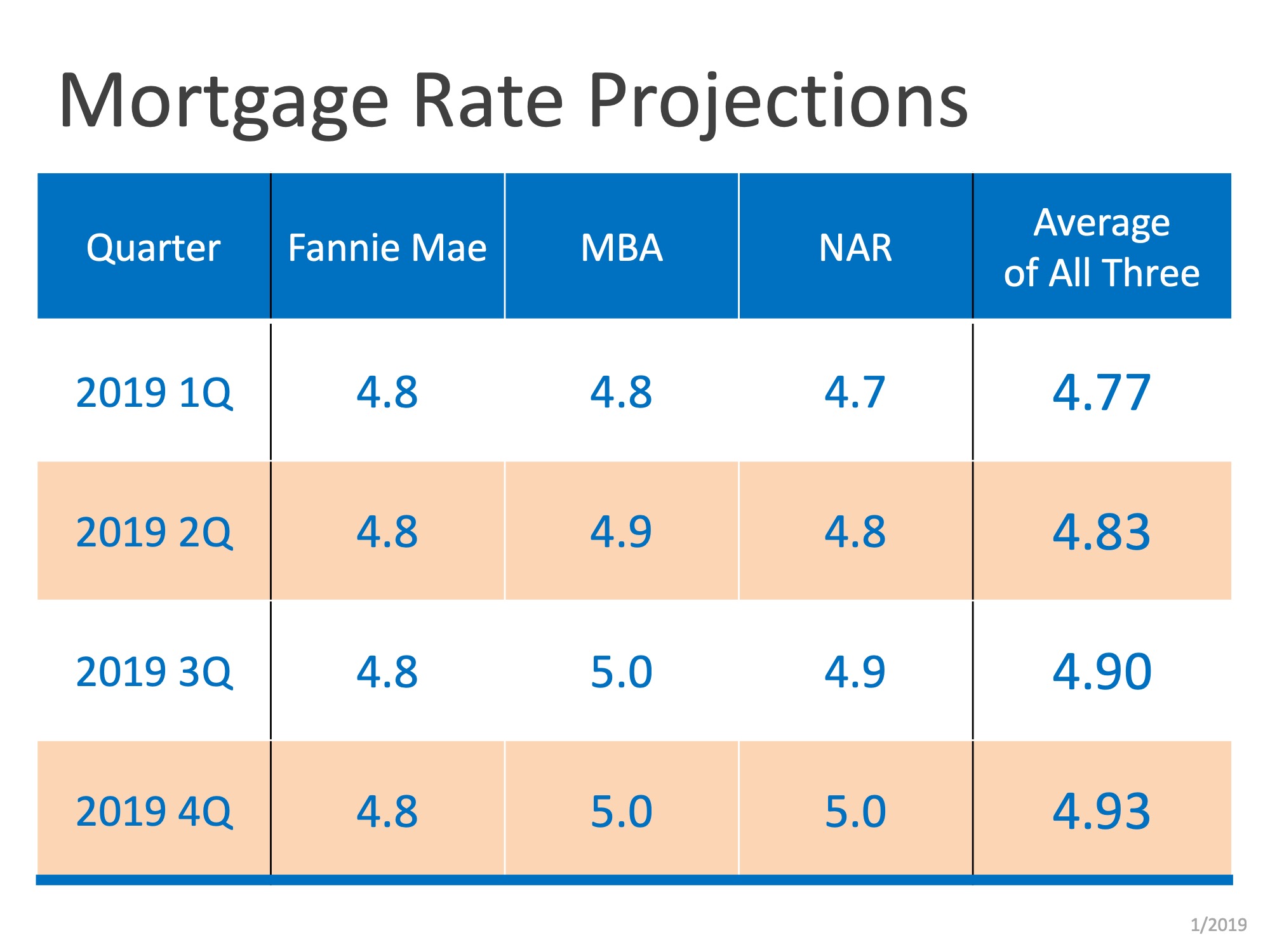
Even a small increase (or decrease) in interest rates can impact your monthly housing cost. If buying a home in 2019 is on your short list of goals to achieve, let’s get together to find out if you are able to today.

Every year around this time, many homeowners begin the process of preparing their homes in case of extreme winter weather. Some others skip winter all together by escaping to their vacation homes in a warmer climate.
For those homeowners staying at their first residence, AccuWeather warns:
“The late-week cold shot should fade next week, but this is a warning shot for winter’s return late in the month and early February.”
Given this, it’s time to go and stock up on winter weather supplies! However, if you’re tired of shoveling snow and dealing with the cold weather, maybe it’s time to consider obtaining a vacation home!
According to the Investment & Vacation Home Buyers 2018 Report by NAR:
“72% of vacation property owners and 71% of investment property owners believe now is a good time to buy.”
It’s time to take advantage of the equity in your home. As the latest Equity Report from ATTOM Data Solutions stated:
“Nearly 14.5 million U.S. properties (are) equity rich — where the combined estimated amount of loans secured by the property was 50 percent or less of the property’s estimated market value — up by more than 433,000 from a year ago to a new high as far back as data is available, Q4 2013.
The 14.5 million equity rich properties in Q3 2018 represented 25.7 percent of all properties with a mortgage.”
This means that over a quarter of Americans who have a mortgage would be able to use some of their home equity to make a significant down payment toward a vacation home, and many are doing just that! According to the same report by NAR:
“33% of vacation buyers purchased in a beach area, 21% purchased on a lakefront, and 15% purchased a vacation home in the country.”
Many homeowners who are close to retirement will use some of their equity to purchase vacation homes, which may eventually become their permanent homes post-retirement!
If you are a homeowner looking to take advantage of your home equity by investing in a vacation home, let’s get together to discuss your options!
If you plan on buying a home this year, it doesn't make sense to wait! Mortgage interest rates and home prices are both projected to increase significantly throughout 2019. Let's get together to discuss your home buying plans today!

As we kick off the new year, many families have made resolutions to enter the housing market in 2019. Whether you are thinking of finally ditching your landlord and buying your first home or selling your starter house to move into your forever home, there are two pieces of the real estate puzzle you need to watch carefully: interest rates & inventory.
Mortgage interest rates had been on the rise for much of 2018, but they made a welcome reversal at the end of the year. According to Freddie Mac’s latest Primary Mortgage Market Survey, rates climbed to 4.94% in November before falling to 4.62% for a 30-year fixed rate mortgage last week. Despite the recent drop, interest rates are projected to reach 5% in 2019.
The interest rate you secure when buying a home not only greatly impacts your monthly housing costs, but also impacts your purchasing power.
Purchasing power, simply put, is the amount of home you can afford to buy for the budget you have available to spend. As rates increase, the price of the house you can afford to buy will decrease if you plan to stay within a certain monthly housing budget.
The chart below shows the impact that rising interest rates would have if you planned to purchase a $400,000 home while keeping your principal and interest payments between $2,020-$2,050 a month.
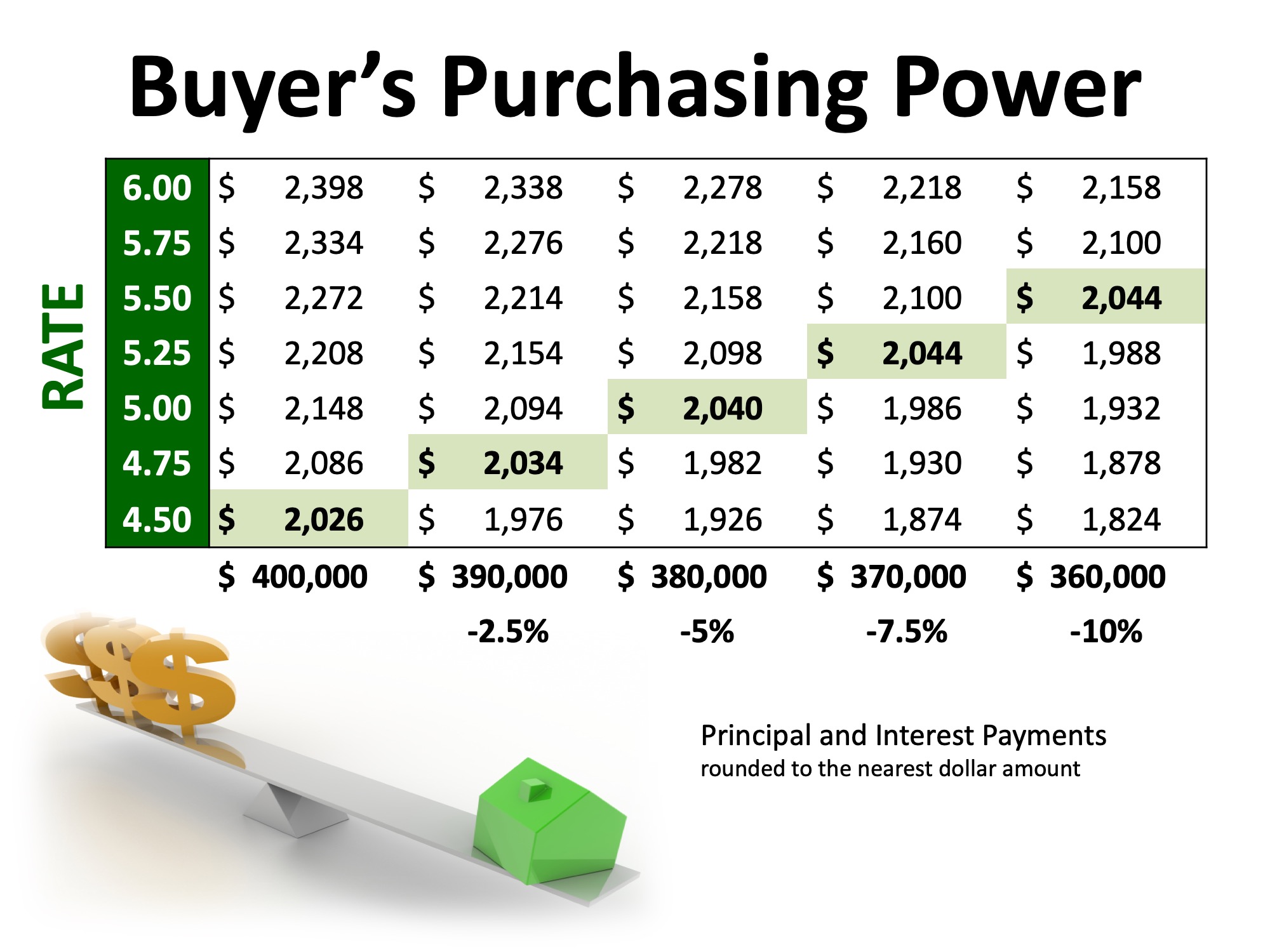
With each quarter of a percent increase in interest rate, the value of the home you can afford decreases by 2.5% (in this example, $10,000).
A ‘normal’ real estate market requires there to be a 6-month supply of homes for sale in order for prices to increase only with inflation. According to the National Association of Realtors (NAR), listing inventory is currently at a 3.9-month supply (still well below the 6-months needed), which has put upward pressure on home prices. Home prices have increased year-over-year for the last 81 straight months.
The inventory of homes for sale in the real estate market had been on a steady decline and experienced year-over-year drops for 36 straight months (from July 2015 to May 2018), but we are starting to see a shift in inventory over the last six months.
The chart below shows the change in housing supply over the last 12 months compared to the previous 12 months. As you can see, since June, inventory levels have started to increase as compared to the same time last year.
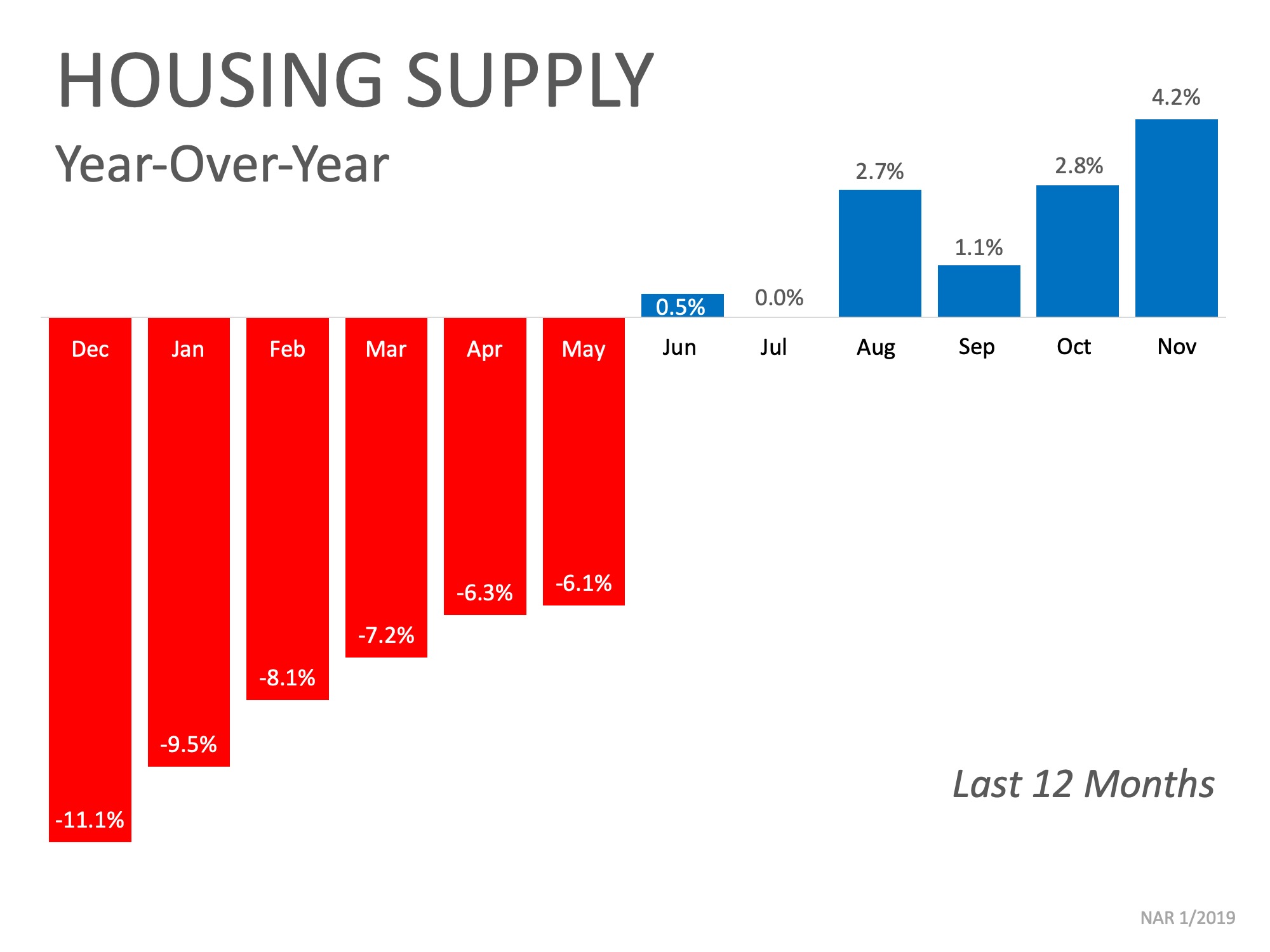
This is a trend to watch as we move further into the new year. If we continue to see an increase in homes for sale, we could start moving further away from a seller’s market and closer to a normal market.
If you are planning to enter the housing market, either as a buyer or a seller, let’s get together to discuss the changes in mortgage interest rates and inventory and what they could mean for you.

In today’s market, as home prices rise and a lack of inventory continues, some homeowners may consider trying to sell their homes on their own, known in the industry as a For Sale by Owner (FSBO). There are several reasons why this might not be a good idea for most sellers.
Here are the top five reasons:
According to NAR’s 2018 Profile of Home Buyers and Sellers, 95% of buyers searched online for a home last year. That is in comparison to only 13% of buyers looking at print newspaper ads. Most real estate agents have an Internet strategy to promote the sale of your home, do you?
Where did buyers find the homes they actually purchased?
The days of selling your house by putting out a lawn sign or putting an ad in the paper are long gone. Having a strong Internet strategy is crucial.
Here is a list of some of the people with whom you must be prepared to negotiate if you decide to For Sale by Owner:
The paperwork involved in selling and buying a home has increased dramatically as industry disclosures and regulations have become mandatory. This is one of the reasons that the percentage of people FSBOing has dropped from 19% to 7% over the last 20+ years.
Many homeowners believe that they can save on the real estate commission by selling on their own, but they don’t realize that the main reason buyers look at FSBOs is because they also believe that they can save on the real estate agent’s commission. The seller and buyer can’t both save the commission.
A study by Collateral Analytics revealed that FSBOs don’t actually save anything, and in some cases may be costing themselves more, by not listing with an agent. One of the main reasons for the price difference at the time of sale is that,
“Properties listed with a broker that is a member of the local MLS will be listed online with all other participating broker websites, marketing the home to a much larger buyer population. And those MLS properties generally offer compensation to agents who represent buyers, incentivizing them to show and sell the property and again potentially enlarging the buyer pool.”
If more buyers see a home, the greater the chances are that there could be a bidding war for the property. The study showed that the difference in price between comparable homes of size and location is currently at an average of 6% this year.
Why would you choose to list on your own and manage the entire transaction when you can hire an agent and not have to pay anything more?
Before you decide to take on the challenges of selling your house on your own, let’s get together to discuss your needs.
Housing inventory is up year-over-year for the first time in three years which means that home price appreciation will likely begin to slow. If you're looking to buy or sell a home, now is still a great time! Let's get together today to go over what this shift in the market means for you.

Following last year’s real estate market was like riding a rollercoaster. The market started off strong in 2018 and then softened before finishing with a mild flurry. However, one thing that did not waiver was America’s belief that owning a home makes sense from a financial standpoint.
An end-of-the-year survey by the Federal Reserve Bank’s Center for Microeconomic Data revealed that:
“The majority of households continue to view housing as a good financial investment.”
And that percentage has increased over the last three years.
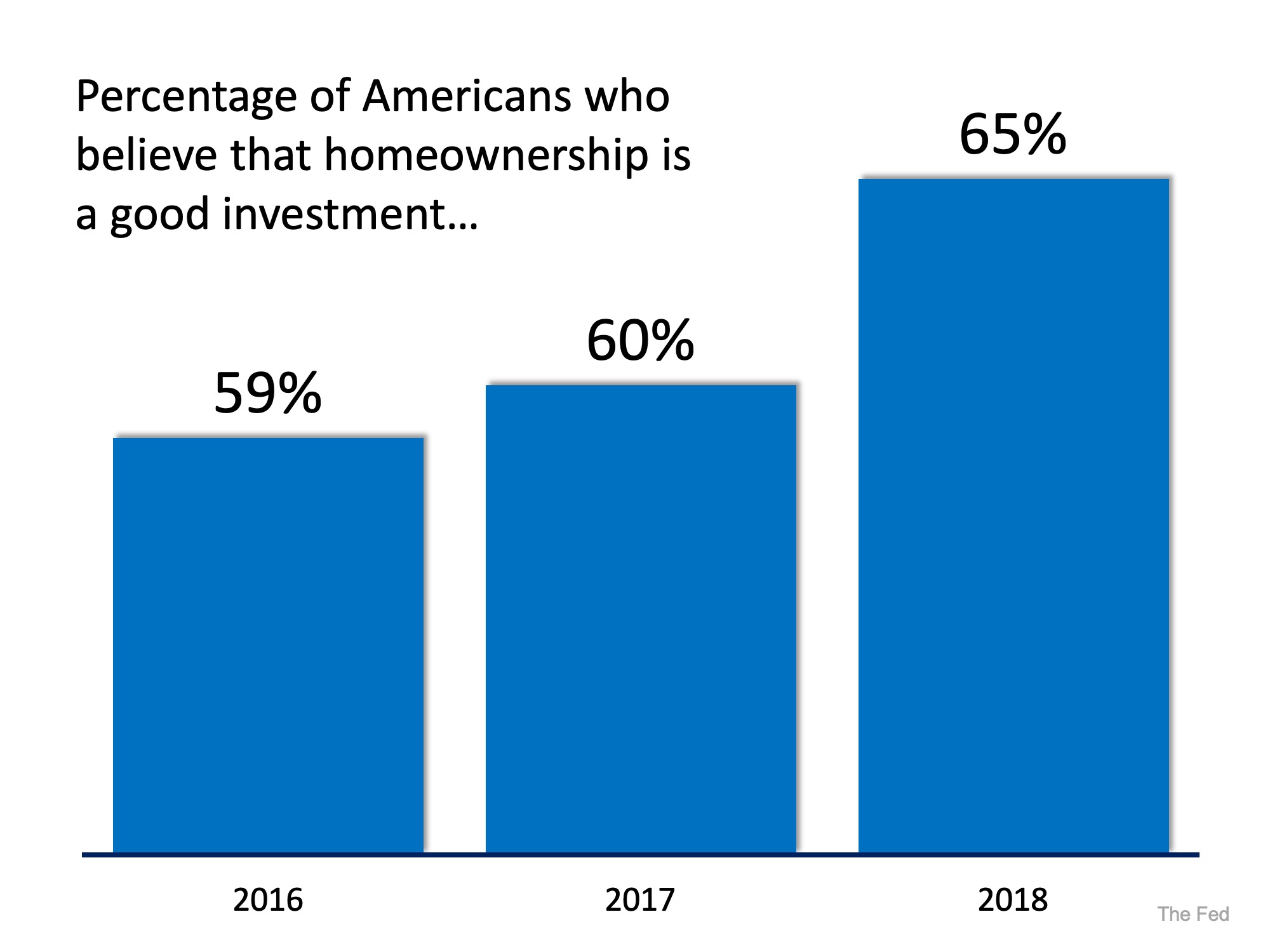
Though there is some uncertainty as to how the real estate market will perform over the next twelve months, one thing remains very certain: America’s belief in homeownership.
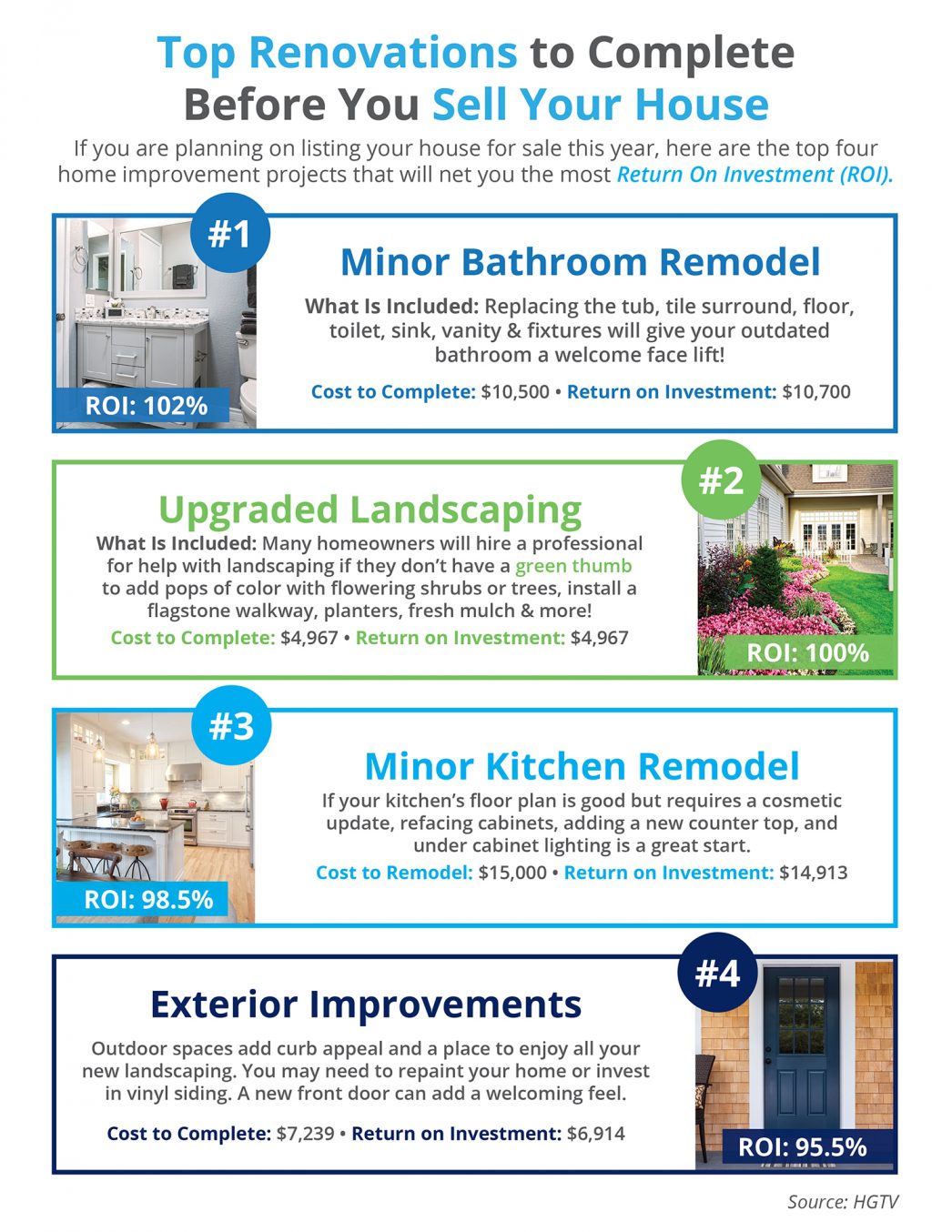
Whether you're buying or selling a home, the transaction can be a bit overwhelming. Working with a real estate professional who understands your market can make your life that much easier! Let's get together to discuss your plans to buy or sell in 2019!