Recently, there's been a lot of news surrounding an impending recession. However, the same experts predicting an economic slowdown also believe it will not be caused by the housing market. If you're thinking of buying or selling a home, there's no need to panic- let's get together to address your concerns and talk about what's really happening.
North Idaho Real Estate Search
Real Estate News You Can Use
You’ll find our blog to be a wealth of information, covering everything from local market statistics and home values to community happenings. That’s because we care about the community and want to help you find your place in it. Please reach out if you have any questions at all. We’d love to talk with you!
Sept. 1, 2019
Top Priorities When Moving with Kids

According to the Pew Research Center, around 37% of U.S students will be going back to school soon and the rest have already started the new academic year. With school-aged children in your home, buying or selling a house can take on a whole different approach when it comes to finding the right size, location, school district, and more.
Recently, the 2019 Moving with Kids Report from the National Association of Realtors®(NAR) studied “the different purchasing habits as well as seller preferences during the home buying and selling process.” This is what they found:
When Purchasing a Home
The major difference between the homebuyers who have children and those who do not is the importance of the neighborhood. In fact, 53% said the quality of the school district is an important factor when purchasing a home, and 50% select neighborhoods by the convenience to the schools.
Buyers with children also purchase larger, detached single-family homes with 4 bedrooms and 2 full bathrooms at approximately 2,110 square feet.
Furthermore, 26% noted how childcare expenses delayed the home-buying process and forced additional compromises: 31% in the size of the home, 24% in the price, and 18% in the distance from work.
When Selling a Home
Of those polled, 23% of buyers with children sold their home “very urgently,” and 46% indicated “somewhat urgently, within a reasonable time frame.” Selling with urgency can pressure sellers to accept offers that are not in their favor. Lawrence Yun, Chief Economist at NAR explains,
“When buying or selling a home, exercising patience is beneficial, but in some cases – such as facing an upcoming school year or the outgrowing of a home – sellers find themselves rushed and forced to accept a less than ideal offer.”
For sellers with children, 21% want a real estate professional to help them sell the home within a specific time frame, 20% at a competitive price, and 19% to market their home to potential buyers.
Bottom Line
Buying or selling a home can be driven by different priorities when you are also raising a family. If you’re a seller with children and looking to relocate, let’s get together to navigate the process in the most reasonable time frame for you and your family.
Sept. 1, 2019
iBuyers: What Is the “Cost of Convenience” When Selling Your Home?

When thinking about selling their house, homeowners have many options. A relatively new option is using an “iBuyer.” What is an iBuyer?
According to Jovio, the definition is:
“A company or investor that uses Automated Valuation Models (AVMs) to make instant offers on homes. It allows sellers to close on a property quickly. Once sold, the company then turns around and resells the home for a profit.”
Today, there are many iBuyer companies such as OfferPad, Zillow Offers, Knock, Opendoor, and Perch. Even some more traditional companies offer the same or similar services (ex. Keller Williams, Redfin, Realogy). Ivy Zelman reported in her ‘Z’ Report that some traditional brokers are partnering with some of the larger iBuyers too:
“Keller Williams announced a partnership with Offerpad, aligning the largest franchise-based brokerage brand in the U.S. with the five-year-old iBuyer. The move follows Realogy’s partnership with Home Partners of America last year as an established brokerage player more directly providing an iBuyer alternative…
Likewise, in early July, Redfin and Opendoor announced a partnership, starting in Phoenix and Atlanta – aligning interests of the 13-year old, tech-enabled and value-focused brokerage with the largest and longest-standing iBuyer. Outside of these larger scale alliances, Zillow’s strategy has been to work with local brokerages as partners on a market-by-market basis.”
Does it make sense to sell your home to an iBuyer?
It depends. Collateral Analytics recently released a study which revealed the advantages and disadvantages of using an iBuyer. According to the study, if the homeowner is looking for the convenience of a quick sale with less uncertainty, using an iBuyer may make sense.
“iBuyers offer quicker closings for sellers who would like to avoid the uncertainty of knowing when and if their home will sell. For motivated sellers who want a predictable sale date and need to move, perhaps a long distance from the current location, there is no question that iBuyers have provided a welcome alternative to traditional brokerage.”
The study, however, also showed there is a cost for that convenience. Collateral Analytics explained:
“Traditional brokers fees generally range from 5% to 7% of the sales price…In addition to this cost, buyers typically pay some closing costs including lender related charges in the range of 1% to 3%.”
In contrast:
“iBuyers charge sellers a ‘convenience fee’ of 6% to 9.5%, some also charge the seller for fees typically paid by buyers at closing adding another 1% or more. Most iBuyers will inspect the home, assess a generous home repair allowance and negotiate a (an additional) credit to handle such repairs…Overall the total direct costs, ignoring repair credits, will run 7% to 10% for an iBuyer, versus the typical 5% to 9% combined seller and buyer costs with a traditional broker. Yet, that is not the end of the story or comparison.”
The study went on to explain how iBuyers need to charge even more because they have additional expenses beyond that of the traditional broker. They include:
- Carrying costs involving significant amounts of capital – The iBuyer must pay the expenses of the house between the time they purchase it and the time they sell it to a new buyer.
- Safeguarding the home risks – A home with an iBuyer ‘For Sale Sign’ alerts anyone passing that the house is vacant. The study suggests that these homes could become targets for vagrants and criminals.
- Adverse selection risks – The study explains that since iBuyers use computer models to determine their offer, they may be unaware of certain challenges in the neighborhood that could adversely impact the value.
- Potential home price declines – As the survey states:
“A downturn in home prices, not forecast by the iBuyer market analysts could be devastating as they ramp up their business platforms, particularly if the cost of capital increases. At the same time, downturns are precisely when the most sellers would want this option.”
Bottom Line
After taking a thorough look at the iBuyer platform, the study concludes that using an iBuyer is more expensive for the homeowner than the traditional brokerage model, but for some sellers, it may still make sense:
“These preliminary empirical results suggest that sellers are paying not just the difference in fees of 2% to 5% more than with traditional agencies, and a generous repair allowance, but another 3% to 5% or more to compensate the iBuyer for liquidity risks and carrying costs. In all, the typical cost to a seller appears to be in the range of 13% to 15% depending on the iBuyer vendor. For some sellers, needing to move or requiring quick extraction of equity, this is certainly worthwhile, but what percentage of the market will want this service remains to be seen.”
Posted in
Selling
Aug. 14, 2019
Why All the Chicken Littles Should Calm Down

The U.S. Census Bureau recently released their 2019 Q2 Homeownership Report. Some began to see the sky falling, believing the report showed Americans may be stepping back from their belief in homeownership.
The national homeownership rate (Americans who owned vs. rented their primary residence) increased significantly during the housing boom, reaching its peak of 69.2% in 2004. The Census Bureau reported that the second quarter of 2019 ended with a homeownership rate of 64.1%, which is down from the 64.8% rate for the fourth quarter of 2018. Based on this news, some started to question the consumer’s belief in the idea of homeownership as a major part of the American Dream.
Everyone Calm Down…
It is true the homeownership rate did fall. However, if you look at the national rate over the last 35 years (1984-2019), you can see that the current homeownership rate has returned to historical norms. The 64.1% rate is equivalent to the rates in 1984 and 1994.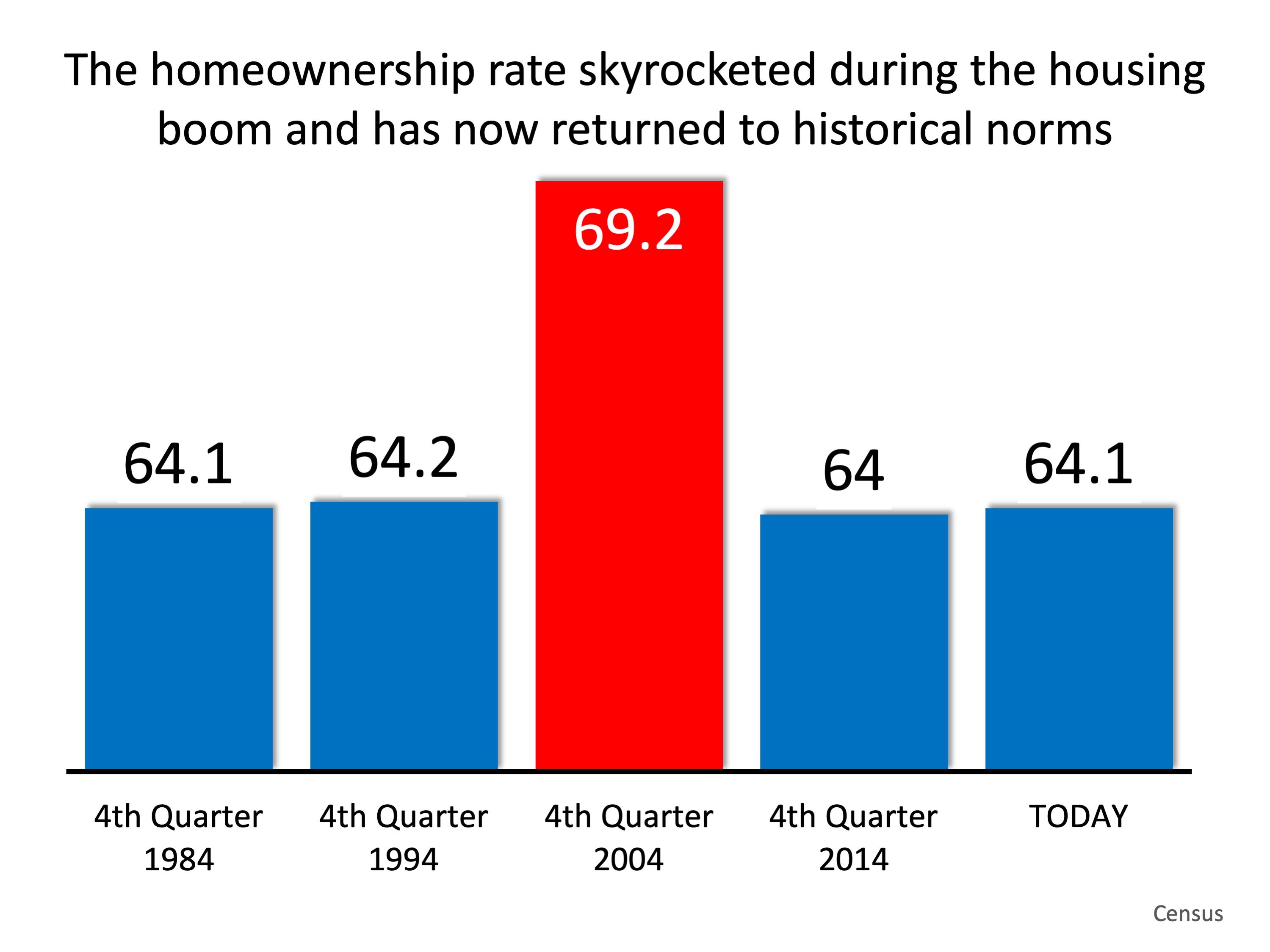
What Will the Future Bring?
Part of the reason the homeownership rate slipped is a lack of inventory available for purchase for first-time home buyers. The demand is there, but currently, the supply is not. It seems, however, that is about to change.
In a recent report, Ivy Zelman explained that builders have finally started to increase the number of homes they’re constructing at the lower-end price points:
“Robust growth in the entry-level price point of late should translate to a reacceleration in homeownership rates moving forward.”
Bottom Line
Today, the homeownership rate sits at historic norms. In all probability, it will increase as more inventory becomes available. There is no reason for concern.
Aug. 14, 2019
August by the Numbers
Staying current is a must when it comes to understanding the housing market. Here's a look at how the numbers stack up today. If you'd like to learn more about homeownership or your next move, let's get together to discuss your options.
Aug. 14, 2019
American Confidence in Housing at an All-Time High

Fannie Mae just released the July edition of their Home Purchase Sentiment Index (HPSI). The HPSI takes information regarding consumers’ confidence in the real estate market from Fannie Mae’s National Housing Survey and condenses it into a single number. Therefore, the HPSI reflects consumers’ current views and forward-looking expectations of housing market conditions.
Great News! The index reached its highest level since Fannie Mae began their survey. Breaking it down, the report revealed:
- The share of Americans who say it is a good time to buy a home increased from the same time last year.
- The share of those who say it is a good time to sell a home increased from the same time last year.
- The share of Americans who say they are not concerned about losing their job over the next 12 months increased dramatically (16 percentage points) from the same time last year.
- The share of Americans who say mortgage rates will go down over the next 12 months increased dramatically (24 percentage points) from the same time last year.
The day after the index was released, Freddie Mac also announced the 30-year fixed-rate mortgage rate fell to its lowest level in three years.
Doug Duncan, Senior Vice President and Chief Economist at Fannie Mae explained the uptick in the index:
“Consumer job confidence and favorable mortgage rate expectations lifted the HPSI to a new survey high in July, despite ongoing housing supply and affordability challenges. Consumers appear to have shaken off a winter slump in sentiment amid strong income gains. Therefore, sentiment is positioned to take advantage of any supply that comes to market, particularly in the affordable category.”
Bottom Line
Consumers are feeling good about the real estate market. Since Americans are not worried about their jobs, see mortgage rates near an all-time low, and believe it is a good time to buy, the housing market will remain strong for the rest of the year.
Aug. 14, 2019
Do You Know Your Credit Score?
Many people assume their credit score is too low to qualify to purchase a home. In reality, 84% of Americans have a credit score that would allow them to become homeowners.! If you'd like to find out more about what your credit score really means, let's get together to chat about the opportunities.
Posted in
Buying
Aug. 14, 2019
5 Real Estate Reality TV Myths Explained

Have you ever been flipping through the channels, only to find yourself glued to the couch in an HGTV binge session? We’ve all been there, watching entire seasons of shows like “Property Brothers,” “Fixer Upper,” and “Love It or List It,” all in one sitting.
When you’re in the middle of your real estate-themed TV show marathon, you might start to think everything you see on the screen must be how it works in real life. However, you may need a reality check.
Reality TV Show Myths vs. Real Life:
Myth #1: Buyers look at 3 homes and decide to purchase one of them.
Truth: There may be buyers who fall in love and buy the first home they see, but according to the National Association of Realtors, the average homebuyer tours 10 homes as a part of their search.
Myth #2: The houses the buyers are touring are still for sale.
Truth: Everything is staged for TV. Many of the homes shown are already sold and are off the market.
Myth #3: The buyers haven’t made a purchase decision yet.
Truth: Since there is no way to show the entire buying process in a 30-minute show, TV producers often choose buyers who are further along in the process and have already chosen a home to buy.
Myth #4: If you list your home for sale, it will ALWAYS sell at the open house.
Truth: Of course, this would be great! Open houses are important to guarantee the most exposure to buyers in your area, but they are only one piece of the overall marketing of your home. Keep in mind, many homes are sold during regular showing appointments as well.
Myth #5: Homeowners decide to sell their homes after a 5-minute conversation.
Truth: Similar to the buyers portrayed on the shows, many of the sellers have already spent hours deliberating the decision to list their homes and move on with their lives and goals.
Bottom Line
Having an experienced professional on your side while navigating the real estate market is the best way to guarantee you can make the home of your dreams a true reality.
July 31, 2019
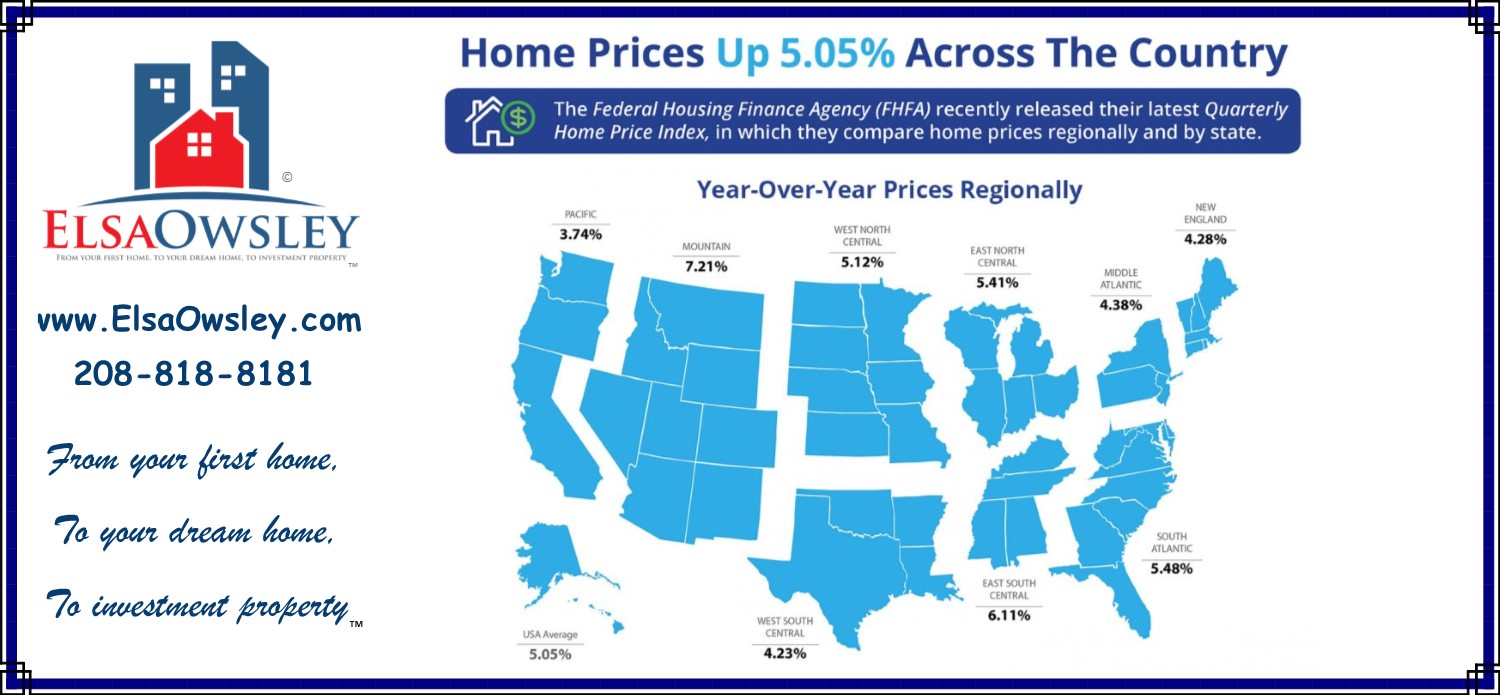
Home Prices Up 5.05% Across the Country [INFOGRAPHIC]
![Home Prices Up 5.05% Across the Country [INFOGRAPHIC] | MyKCM](https://files.mykcm.com/2019/07/25072858/20190729-MEM-1046x1600.jpg)
Some Highlights:
- The Federal Housing Finance Agency (FHFA) recently released their latest Quarterly Home Price Index report.
- In the report, home prices are compared both regionally and by state.
- Based on the latest numbers, if you plan on relocating to another state, waiting to move may end up costing you more!
July 31, 2019
5 Things to Know About this Housing Market
Wages are increasing, mortgage rates are low, and inventory is building each month. Let's get together to talk about how to use the strength of the current economy to your advantage if you're considering buying or selling a home in the near future!